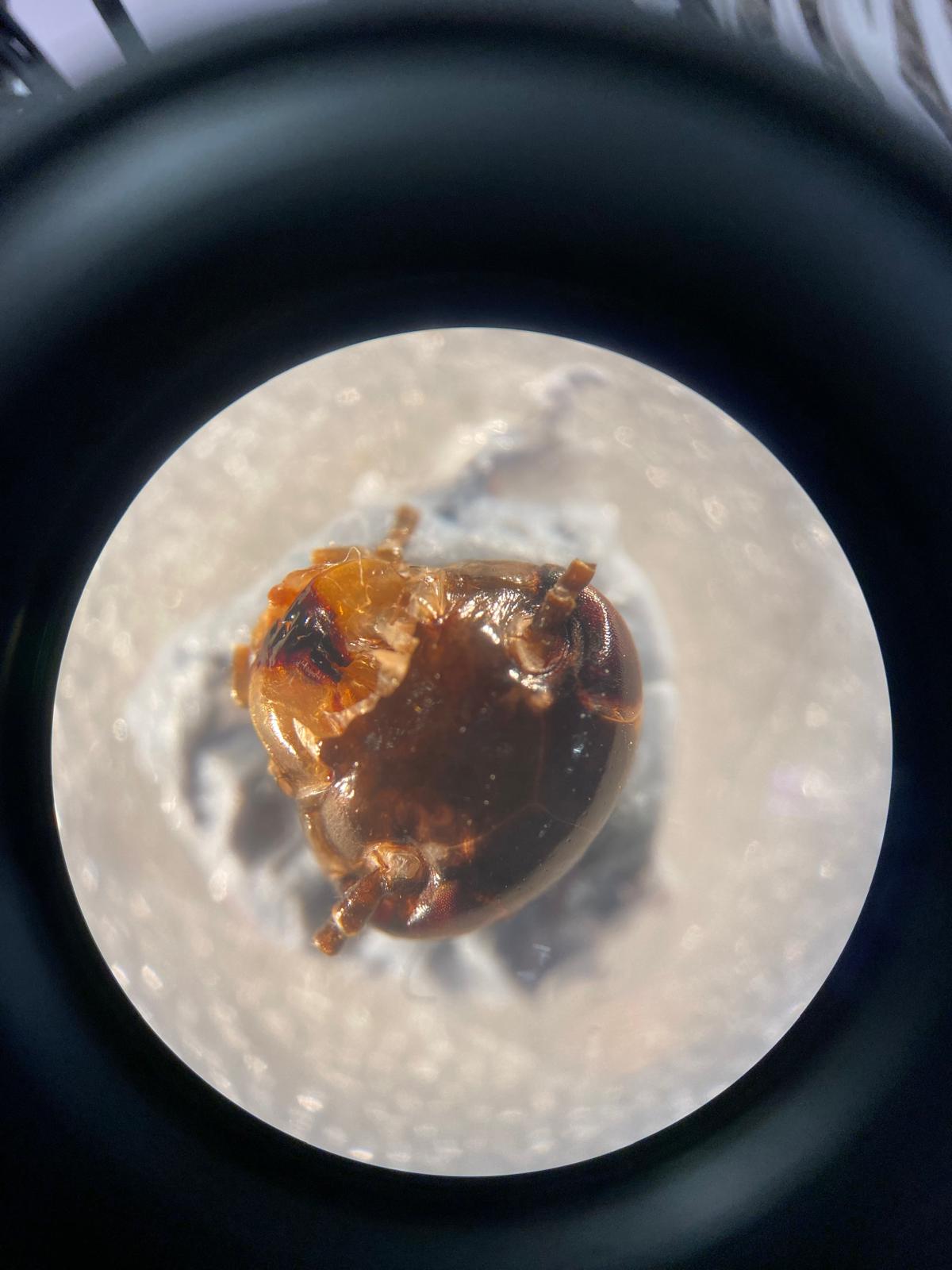
Research
Plant-Insect Interaction
Pitcher Plants Fluid Mechanics
Mechanisms for insect capture and survival in Nepenthes pitcher plants
Pitcher plants of the genus Nepenthes have highly specialised leaves adapted to capture and digest arthropod prey.
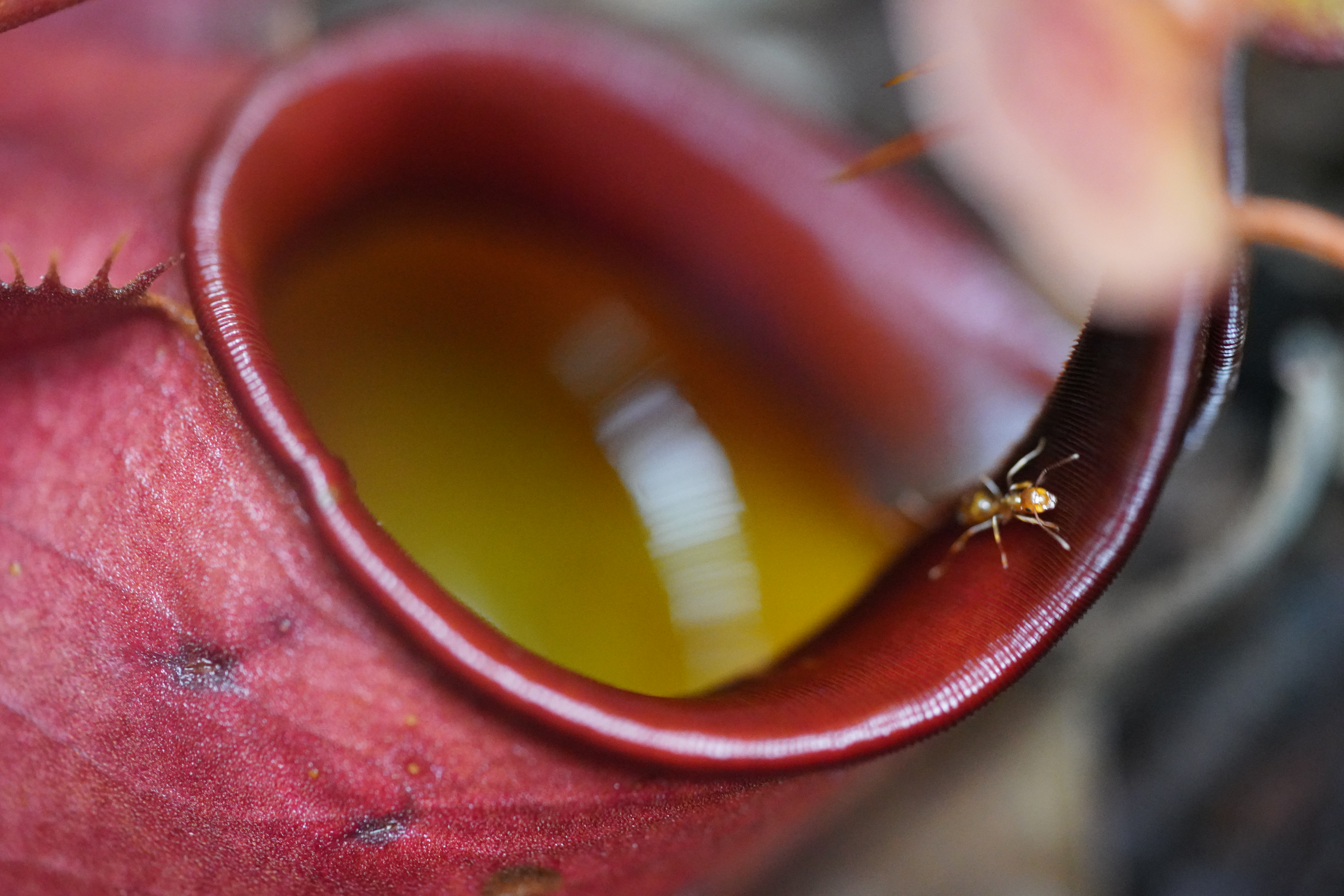
In many Nepenthes species, the critical structure responsible for insect trapping is the pitcher rim (peristome), which has a highly regular microstructure. Its surface is completely wettable so that it is covered by thin water films when wetted by condensation, rain or nectar. Only when wet, the peristome surface is slippery for insects, and most visitors "aquaplane" and fall into the pitcher.
Insect aquaplaning!

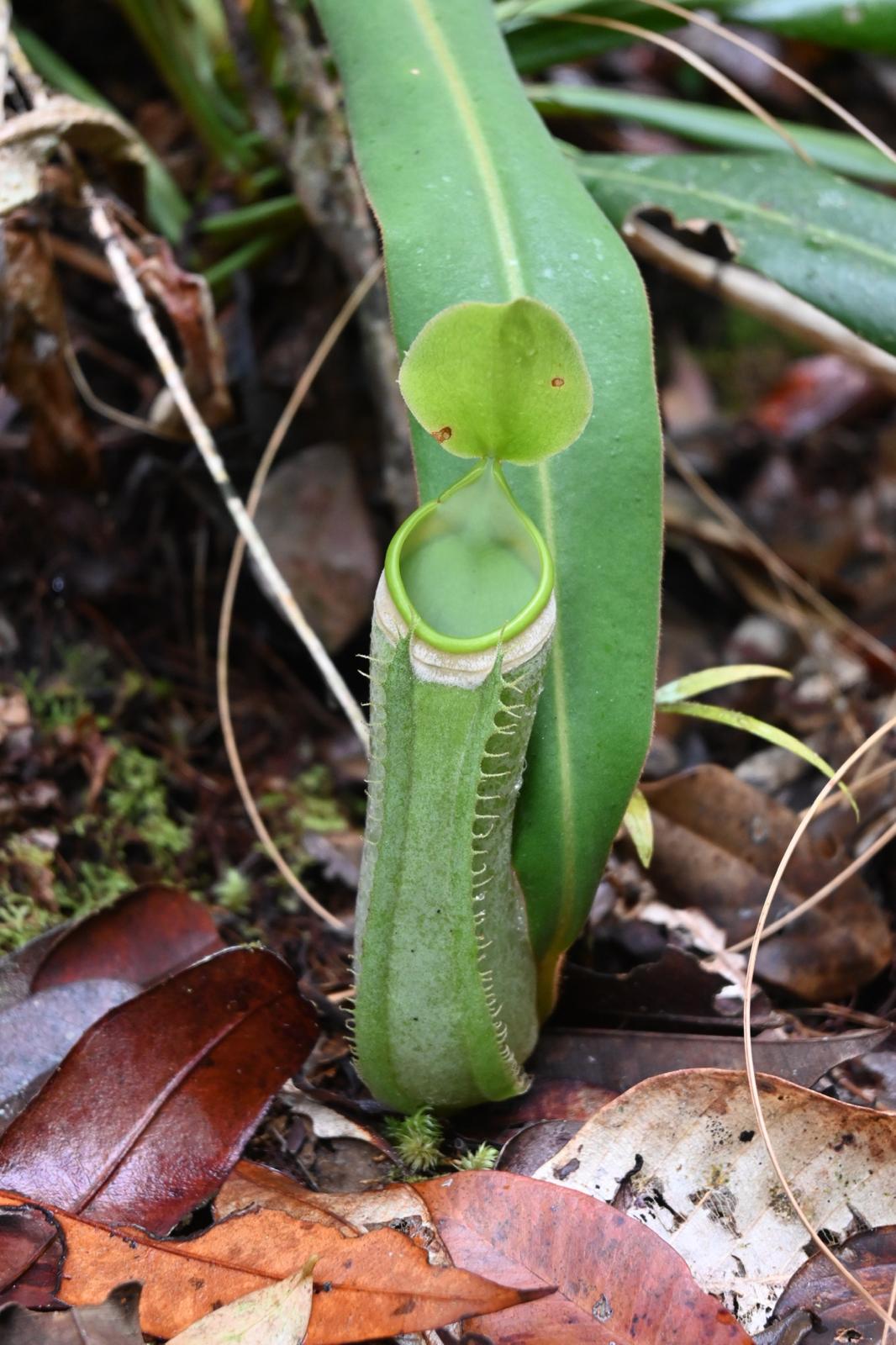
Beyond the slippery peristome lies a deadly fluid held within the pitcher below. This fluid can have complex properties, such as being very viscoelastic, which makes it extremely efficient at retaining fallen prey. Charlotte Andrew's PhD examines fluid-mediated plant-animal interactions in these pitcher plants (and sundews). This research investigates the physical properties of these trapping fluids and how environmental factors such as rainfall or evaporation affect its volume and composition. Her work uncovers how Nepenthes pitchers of different species regulate their fluid volume and composition and how these factors affect insect capture and escape.
One such plant-animal interaction occurs in the Bornean pitcher plant species, Nepenthes bicalcarata, that plays host to the very unusual ant Colobopsis schmitzi who make their nests inside the hollow pitcher tendrils. Unlike most insects that get trapped, Colobopsis schmitzi ants are able to run around on the wet and slippery pitcher surfaces, where all other insects slip. They even descend into the pitcher fluid, where they dive and steal captured prey. The kinematics and behavioural and morphological adaptations of C. schmitzi for survival in this otherwise deadly carnivorous plant are studied by Viggo Rey.
Insect-plant interactions are currently studied by Charlotte Andrew, Ritabrata Chowdhury and Viggo Rey.
Macaranga-Ant Interactions